Guides
Tattoo studios: the parts worth your attention
Tattoo studios worth watching cannot be named honestly from a page, so here are twenty-five signs of one, seen in the room, on the desk, and in the record.
What to take away
- Ten tattoo studios are named in the table below, each with a location and one public fact.
- The first five are Daredevil Tattoo, Smith Street Tattoo Parlour, Kings Avenue Tattoo, Shamrock Social Club and Bang Bang Tattoo.
- The second five are Hart & Huntington Tattoo Company, High Voltage Tattoo, Love Hate Tattoo, Great Lakes Tattoo and New York Adorned.
- A name is a starting point. The twenty-five signs below separate a tattoo studio worth watching from one that is only busy.
- The signs sit where a client can see themthe room, the desk, the work, the artists, and the record. An owner can score their own studio against the same list.
Ten tattoo studios worth a look
A studio is its artists in a room at a particular time. The room stays. The artists move, and the waiting lists, the styles and the reason anyone was watching move with them. The names below are addresses to check, not a ranking.
The expansion and market guide explains why demand in this trade follows the artist rather than the address. That is why a list of addresses is a starting point and the signs further down are the real test.
| Studio | Where | Known for |
|---|---|---|
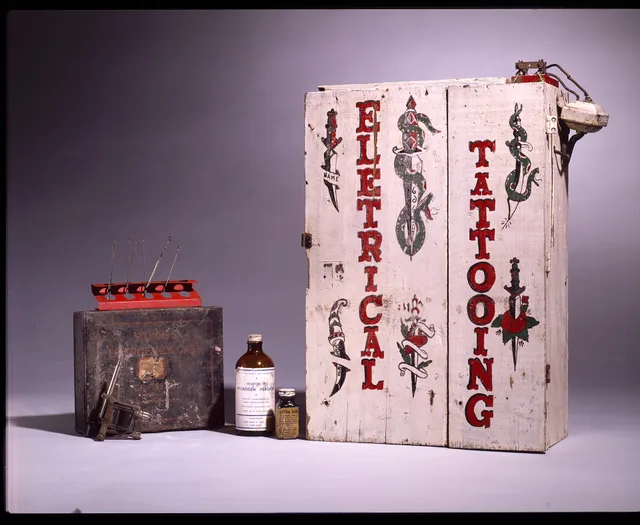
| Daredevil Tattoo | Division Street, Lower East Side, Manhattan | Co-owned by Michelle Myles and Brad Fink; the shop holds the Daredevil Tattoo Museum, a collection of machines, flash and photographs that visitors can see |
| Smith Street Tattoo Parlour | Smith Street, Carroll Gardens, Brooklyn | Traditional American tattooing by a small crew, with Bert Krak and Steve Boltz among the artists |
| Kings Avenue Tattoo | Massapequa, New York, with a second shop in Manhattan | Mike Rubendall's studio; large-scale Japanese work and black-and-grey |
| Shamrock Social Club | Sunset Boulevard, West Hollywood, California | Mark Mahoney's shop; single-needle black-and-grey, with a long client list of musicians and actors |
| Bang Bang Tattoo | Manhattan, New York | Keith "Bang Bang" McCurdy; fine-line work, and the ribcage tattoo on Rihanna is among the pieces credited to him |
| Hart & Huntington Tattoo Company | Started in Las Vegas, with shops in other cities | Carey Hart's chain, so the name travels further than any single room |
| High Voltage Tattoo | West Hollywood, California | The shop where the series LA Ink was filmed |
| Love Hate Tattoo | Miami Beach, Florida | The shop behind the series Miami Ink, with Ami James as its best-known name |
| Great Lakes Tattoo | Grand Avenue, Chicago | Nick Colella's shop; traditional American work |
| New York Adorned | East Village, Manhattan | A large roster of artists under one roof, which suits a client who wants options |
Guest artists rotate through most of these rooms, so the person who built a studio's reputation may not be in the chair on your date. Ask who is tattooing, whether that artist is staff or a guest, and who handles the touch-up if a line needs one.
Score the ten names against the signs that follow. The desk signs, 7 through 12, show up in the first reply to an inquiry. The record signs, 23 through 25, show whether the business will still be there in five years.
In the room
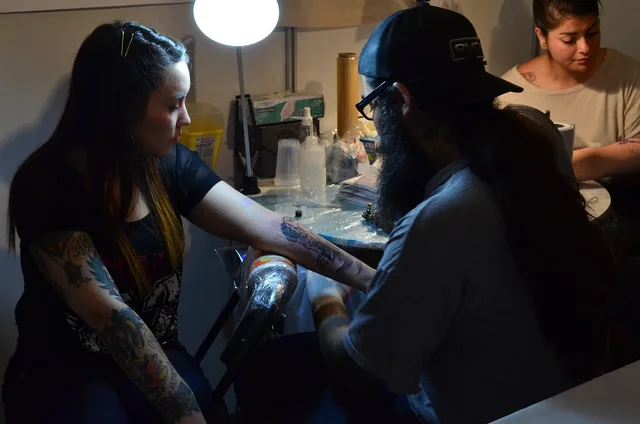
- The procedure area is visibly separate from the waiting area, and a client cannot wander into it.
- Sharps containers sit at every station, not one shared across the room.
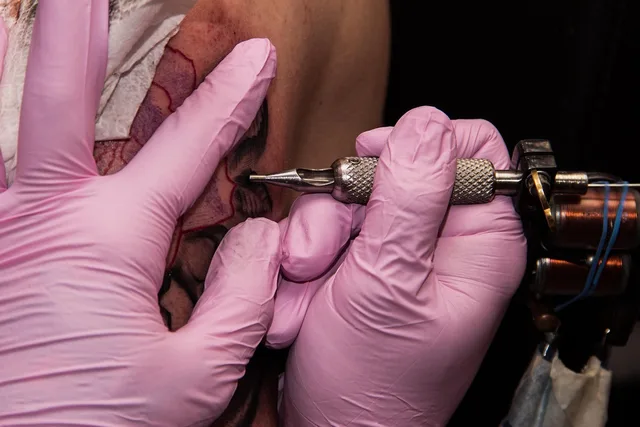
- Single-use supplies are opened in front of the client, every time, without being asked.
- The station is broken down and disinfected between clients while the next client waits, rather than reset in a hurry.
- The photographs on the profile match the room you walk into.
- The chairs suit long sittings, and the station matches what the equipment and setup guide describes and the opening-day equipment checklist itemizes.
On the desk
- An inquiry gets a reply within a stated time, and the reply carries the minimum, the deposit rule, and the next step.
- The deposit is taken before the slot is held, and the confirmation says the same thing as the booking page.
- The consent and age-verification form is completed before the block starts, and every field is filled.
- A client at their limit is stopped, and the next sitting is booked before they leave.
- Walk-ins have a window, and outside it they are offered a booking rather than the chair.
- The desk asks every client where they saw the work and writes it down.
In the work
- The portfolio shows healed pieces as well as fresh ones, credited by artist.
- The touch-up terms are published with their exclusions, and the aftercare sheet says the same thing.
- Cover-ups come with a written assessment of what can and cannot be hidden, before a deposit.
- Large pieces are planned as sittings with an exit clause, in writing.
- The studio refers out work its artists do not do, by name, without being asked twice.
Among the artists
- Each artist's license is on file and current, and the studio can say which authority issued it; the licensing and compliance guide explains what that inventory looks like.
- The arrangement is clearrenters know they are renters, employees know they are employees, and the desk knows whose deposits it takes.
- Guests come through, and the studio can say whether the licensing body covered them and who did the touch-up after they left.
- Apprentices are disclosed to clients as supervised, and the supervising artist is present.
- Artists stay. A room whose chairs turn over every season has a problem with its agreements or its owner.
In the record
- The sterilization log or the single-use stock record can be shown at the station, on request, without a search.
- Ink lots are recorded by session, so a reaction can be traced; the FDA's U.S. Food and Drug Administration: Tattoos, Temporary Tattoos and Permanent Makeup page explains that inks are regulated as cosmetics and how reactions are reported, and a studio worth watching has read it.
- The owner can produce the studio's own measures for last month: utilization per chair, sat rate, touch-up hours per piece. A studio that knows its numbers is a studio that will still be there.
Using the list
An owner scoring their own room against the twenty-five signs will find the desk section hardest and the record section most revealing. A prospective renter choosing a room can score it on a visit and a booking.
A client can score a named studio on the reply to an inquiry and the first ten minutes at the station. None of the signs depends on the studio's name.
The market around a studio matters less than the list suggests. For context, the U.S. Bureau of Labor Statistics: Occupational Employment and Wage Statistics Tables give occupation and area wage estimates, which hint at what a studio's desk and employed roles cost in that area.
The U.S. Small Business Administration: SBA Business Guide describes the general work of running and growing a small business. Every studio named above has done that work.
The marketing that makes a studio visible enough to watch is the portfolio. The marketing and growth guide treats it as the product.
Common questions
Why these ten, and not the studios that are widely admired?
Because admiration is a season and the artist is the part that moves. The ten names above are widely documented places, and the notes beside them are public facts rather than a verdict. Every sign in this article is checkable by anyone standing in the room.
Can a small studio in a small town score well?
Yes, and often better than a large one. The desk section is easier to hold with one chair, and the record section depends on habit, not size.
Which sign is the strongest single indicator?
Sign 23. A studio that can show its log at the station without a search runs the procedure properly on days nobody is watching.
What does a low score on the artist section mean?
Usually that the arrangement is unclear or the owner is hard to work for. Artists leave rooms for those two reasons far more than for money.